Find the leak before it finds your equipment.
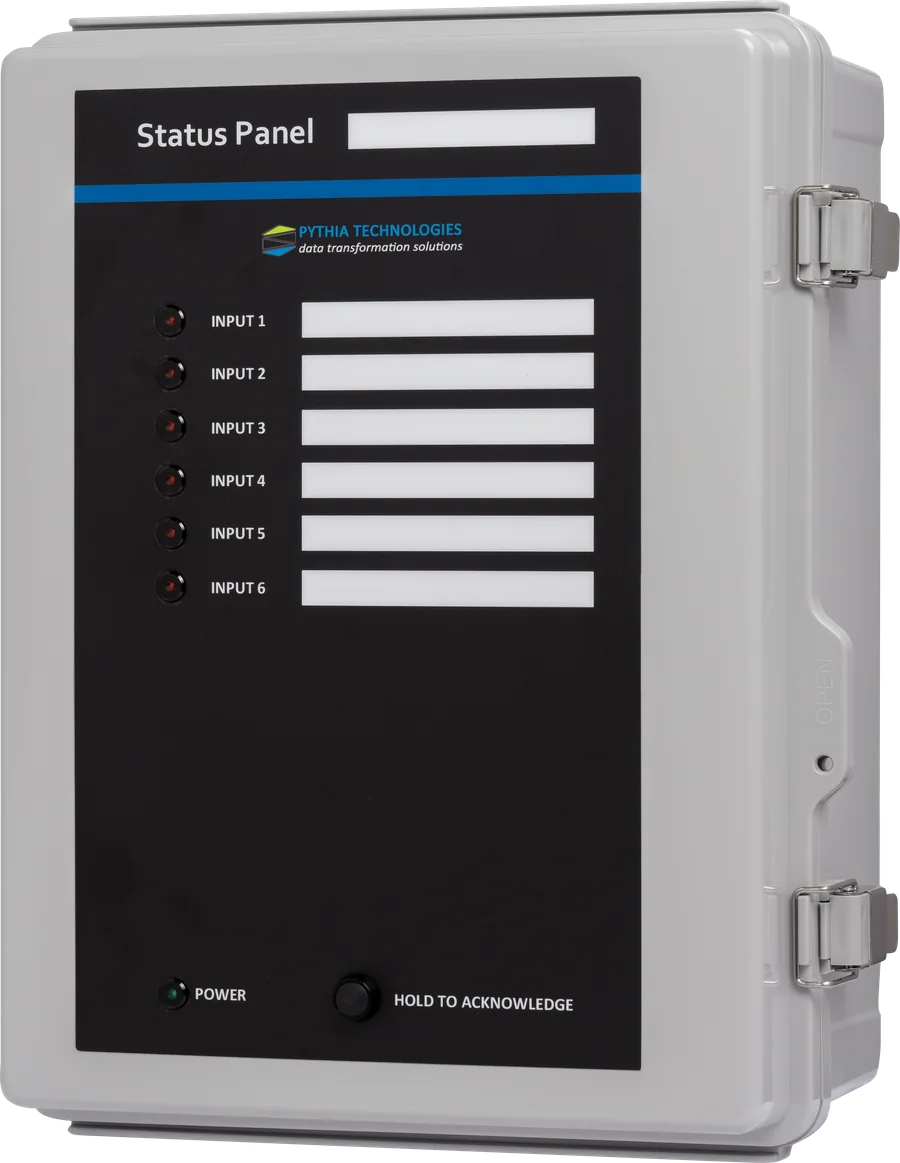
The Remote Leak Detection Panel watches up to six leak zones and powers the detectors that guard them. Each zone has its own LED, label and relay, an alarm sounds the moment liquid appears, and every zone is published over Modbus for your BMS.
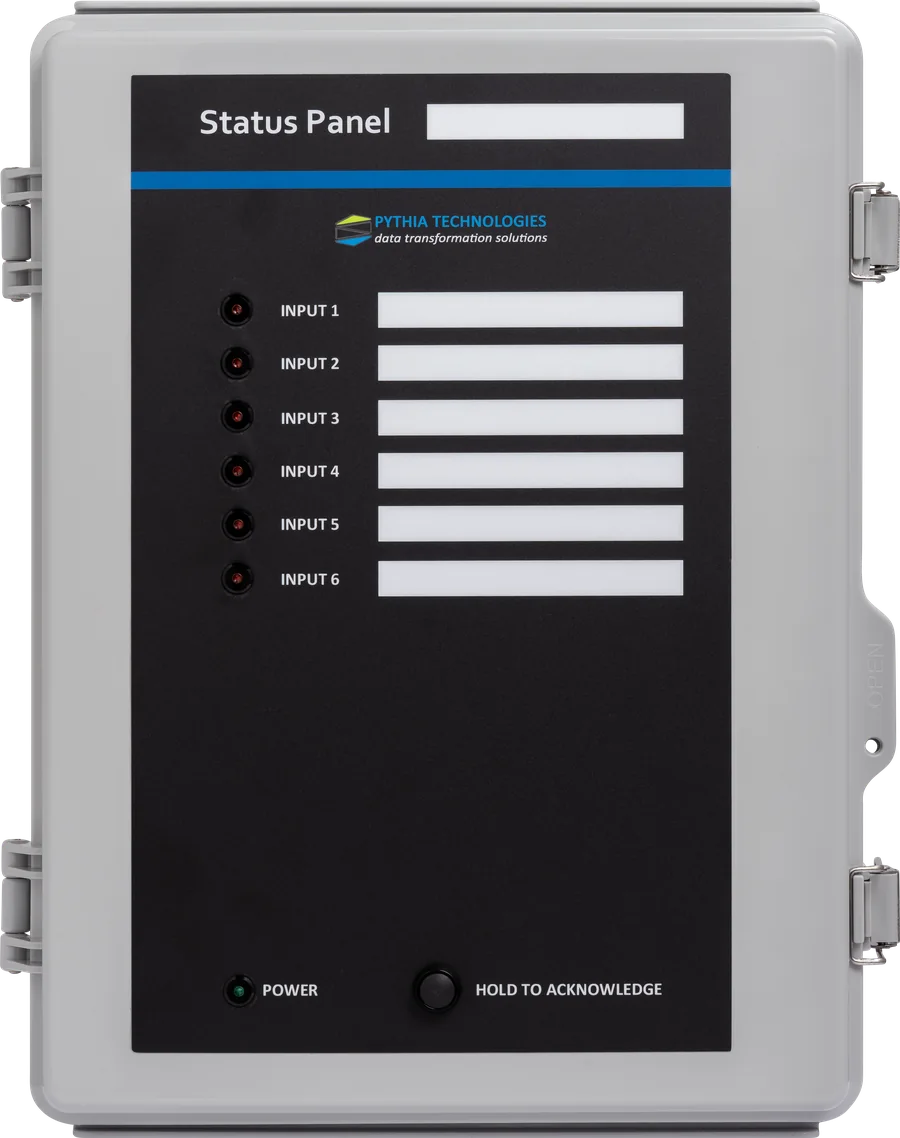 LEAK DETECTIONCRAC-1 PanCRAC-2 PanCRAC-3 PanCRAC-4 PanCHW Pipe LeakCHW Rope Trouble
One panel powers and watches the whole leak field.
Each detector is powered from the panel and wired back to one of its six zone inputs.
When liquid reaches a detector, the panel lights that zone, sounds the buzzer, switches the zone relay and the common alarm relay, and reports the zone over Modbus.
Six zones you can see, hear and trust.
Labeled by location
A write-on strip beside each zone LED, compatible with Brother ½-inch labels, so staff see "CRAC-2 Pan", not "Input 2".
Powers the detectors
A built-in 24 VAC (RSP2-06) or 24 VDC (RSP3-06) supply at 40 VA feeds the external detectors. No separate power supply to find.
A relay for every zone
Six zone output relays plus a common alarm relay (NO or NC, 6 A) can drive local beacons or signal a BMS or annunciator.
Latching alarms
A leak stays displayed until someone acknowledges it, even if the liquid dries or the detector resets. Latching is set per zone.
NO or NC, per zone
Each input is set normally open or normally closed to match the detector, including fail-safe wiring that alarms on a cut wire.
Test it any time
Hold the Acknowledge button for about five seconds: every LED lights and the buzzer sounds.
Point detection and continuous coverage.
Both Pythia detectors run on 11–27 VAC or VDC, within range of either panel's detector power, and wire straight into a zone input through voltage-free SPDT contacts.
LD1
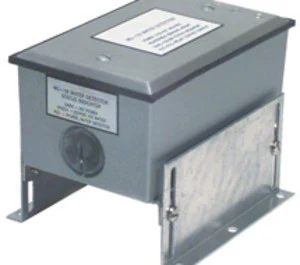
Gold-plated probes detect liquid at one spot: a drip pan, a floor low point or the base of a unit. Probe height adjusts from 0 to 1.5 in, in a NEMA 4 cast-aluminum enclosure, with an SPDT alarm contact and power and alarm LEDs.
LD2 Series
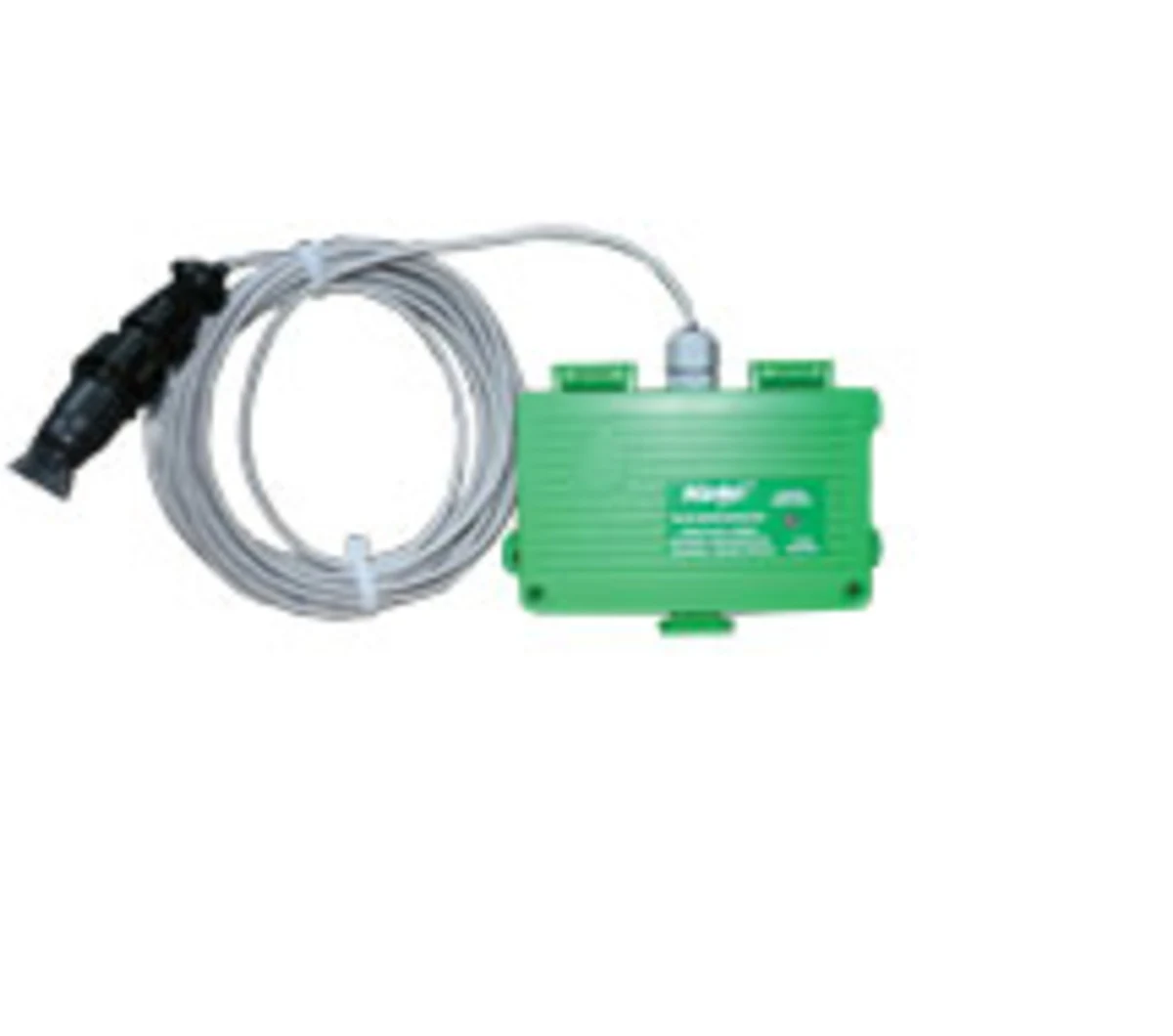
Senses liquid anywhere along its rope, in 10, 25, 50 or 100 ft lengths, or the LD2-LC with a leader cable. Separate Alarm and Trouble relays: the Trouble relay flags a cut, broken or unplugged rope.
Set the detector's E/D jumper to D and a cut wire or a dead detector raises an alarm instead of going quiet. Set the panel zone to NO or NC to match.
Match the panel to your detector voltage.
| Detector power | |
|---|---|
| CS0-RSP2-06 | Built-in 120 VAC to 24 VAC transformer, 40 VA. Choose it when your detectors run on 24 VAC |
| CS0-RSP3-06 | Built-in 120 VAC to 24 VDC supply, 40 VA. Choose it when your detectors run on 24 VDC |
| Identical on both | |
| Leak zones | 6 voltage-free dry-contact inputs, NO or NC, up to 1,000 ft |
| Outputs | 6 zone relays plus 1 common alarm relay, NO or NC, 6 A |
| Communications | Modbus RTU standard; Modbus/TCP, SNMP and BACnet/IP with optional adapters |
From a drip pan to a data-hall perimeter.
CRAC drip pans
A CS0-RSP2-06 with four LD1 detectors, one in each CRAC drip pan, on latching zones 1 to 4. Staff know exactly which pan is overflowing the moment the panel alarms.
Chilled-water pipe run
A CS0-RSP3-06 with an LD2-50 rope under the pipe. A leak at any joint trips Zone 1; if the rope is cut or unplugged during other work, Zone 2 says so.
Perimeter plus hot spots
An LD2-100 rope rings a data hall on Zones 1 and 2, two LD1s cover high-risk units on Zones 3 and 4, and two zones stay free for later. Modbus/TCP to the BMS.
CS0-RSP2-06 and CS0-RSP3-06.
| Inputs and outputs | |
|---|---|
| Leak zone inputs | 6 voltage-free dry contacts, each NO or NC. Up to 1,000 ft with Belden 6300UE |
| Zone output relays | 6, one per zone, NO or NC. 6 A at 250 VAC, 6 A at 30 VDC. Class 2 circuits only |
| Common alarm relay | 1, NO or NC, same rating. Latching available |
| Detector power | RSP2-06: 24 VAC, 40 VA transformer. RSP3-06: 24 VDC supply, 40 VA |
| Local indication | LED and write-on label per zone (Brother ½ in compatible), power LED, buzzer, hold-to-acknowledge button, LED test mode |
| Communications and setup | |
| Protocols | Modbus RTU, RS-485, standard (address 254, 19200, 8-N-1). Modbus/TCP, SNMP and BACnet/IP with optional adapters |
| Configuration | NO/NC and latching per zone, alarm delay 0–60 s and buzzer enable, with the Pythia configuration tool or Modbus registers |
| Physical | |
| Enclosure | Wall-mount ABS, IP67 rated, UL94-V0. Meets or exceeds the UL 508A Open Industrial Control Panel standard |
| Power | 120 VAC standard. 24 VAC and 48 VDC optional |
| Environment | −30 to 45 °C (−22 to 113 °F) inside the enclosure. 5 to 95% RH, non-condensing |
| Recommended wiring | Belden 6300UE for dry contacts, Belden 6300FE for communications |
Every zone, on the network.
| Point | Register | Value |
|---|---|---|
| Zone inputs 1–6 | 41001–41006 | 0 / 1 |
| Zone outputs 1–6 | 42001–42006 | 0 / 1 |
| Buzzer | 42009 | 0 / 1 |
| Common alarm | 42012 | 0 / 1 |
| Buzzer enable | 44000 | read/write |
| Alarm delay | 44001 | 0–60 s |
| NO / NC, zones 1–6 | 44011–44016 | read/write |
| Latching, zones 1–6 | 44021–44026 | read/write |
The full register and BACnet object lists are in the product guide. Specifications are subject to change.
From a red light to a full leak history.
The Pythia DM polls the panel over Modbus and gives every leak an alarm, a notification, a time stamp and a trend. With the DM AI Connector, an assistant can tell you which zone is wet, when it started and how often it has happened before.
Leak detection panel questions, answered.
What is the Remote Leak Detection Panel?
The Remote Leak Detection Panel (CS0-RSP2-06 or CS0-RSP3-06) is a wall-mount panel that monitors up to six leak-detection zones and powers the detectors that guard them. Each zone has its own LED, write-on label and output relay. The panel sounds an audible alarm, has a common alarm relay, and publishes every zone over Modbus.
What is the difference between the CS0-RSP2-06 and the CS0-RSP3-06?
Only the detector power. The CS0-RSP2-06 has a built-in 24 VAC transformer and the CS0-RSP3-06 a built-in 24 VDC supply, each at 40 VA. Everything else is identical. Choose the model that matches your detectors' voltage.
Which leak detectors work with the panel?
Any leak detector with a voltage-free dry-contact output. Pythia's LD1 point detector and LD2 sensing-rope detector run on 11–27 VAC or VDC, so either panel can power them, and their SPDT contacts wire straight into a zone input.
How far away can the detectors be?
Up to 1,000 feet from the panel on voltage-free dry-contact wiring. Belden 6300UE is recommended.
Can the panel tell me if a sensing rope is cut?
Yes, with the LD2. Its supervisory Trouble relay changes state if the rope is unplugged, broken or cut. Wire it to its own zone and the panel shows a rope fault separately from a leak.
Will a leak stay displayed after the water dries?
Yes, if latching is enabled for that zone. A latched zone stays lit until someone acknowledges and clears it, even if the detector resets.
Does the panel connect to a BMS?
Yes. All six zones are published over Modbus RTU as standard, with Modbus/TCP, SNMP and BACnet/IP available through optional adapters. The common alarm relay and the six zone relays can also signal a BMS or annunciator directly.
Can leak data go to the Pythia DM or an AI assistant?
Yes. The Pythia DM can poll the panel over Modbus, giving every leak an alarm, a notification, a time stamp and a trend. With the DM AI Connector, an AI assistant can answer from that data.
Call for pricing.
Contact us for a demo or pricing, and we'll confirm the right configuration for your site.